About a year ago I purchased the Laowa 12-24mm lens. Since then it has become one of my favourite lenses to use. It’s a highly technical lens with incredible versatility. What Laowa has achieved here needs to be applauded. Not only providing a shift lens for APSC sensor cameras, but also a zoom lens, it just blows my mind. Is it the perfect lens? No, but any negatives are outweighed by overwhelming positives, plus this lens is just outright fun to use.
The Positives: WHAT I LOVE
It’s a zoom! The lens was based on a Laowa full frame version of the 12-24mm, but whoever had the lightbulb moment of genius to turn it into a zoom-shift lens should get a pay rise. There is no other zoom shift lens on the market. This lens is unique, a bonafide unicorn! Will it be as sharp as individual primes? Probably not, wide open at f5.6 it’s a bit soft but stop it down to F8, F11 & F16 and you are laughing. The lens is reasonably priced as well, so you really do get plenty of bang for your buck!
It’s fantastic for capturing grand scenes of architecture. The issue I have with a standard wide angle zoom is when you attempt to create nice straight lines in your frame invariably you end up with images you didn’t want to take, like having heavily weighted foregrounds or you cut off elements in the top part of the frame. When shooting a shift zoom lens, the issue is solved. You get to compose a scene as you want it to look. The following 3 examples show off how the Laowa zoom shift lens helped me take the image I wanted to frame.
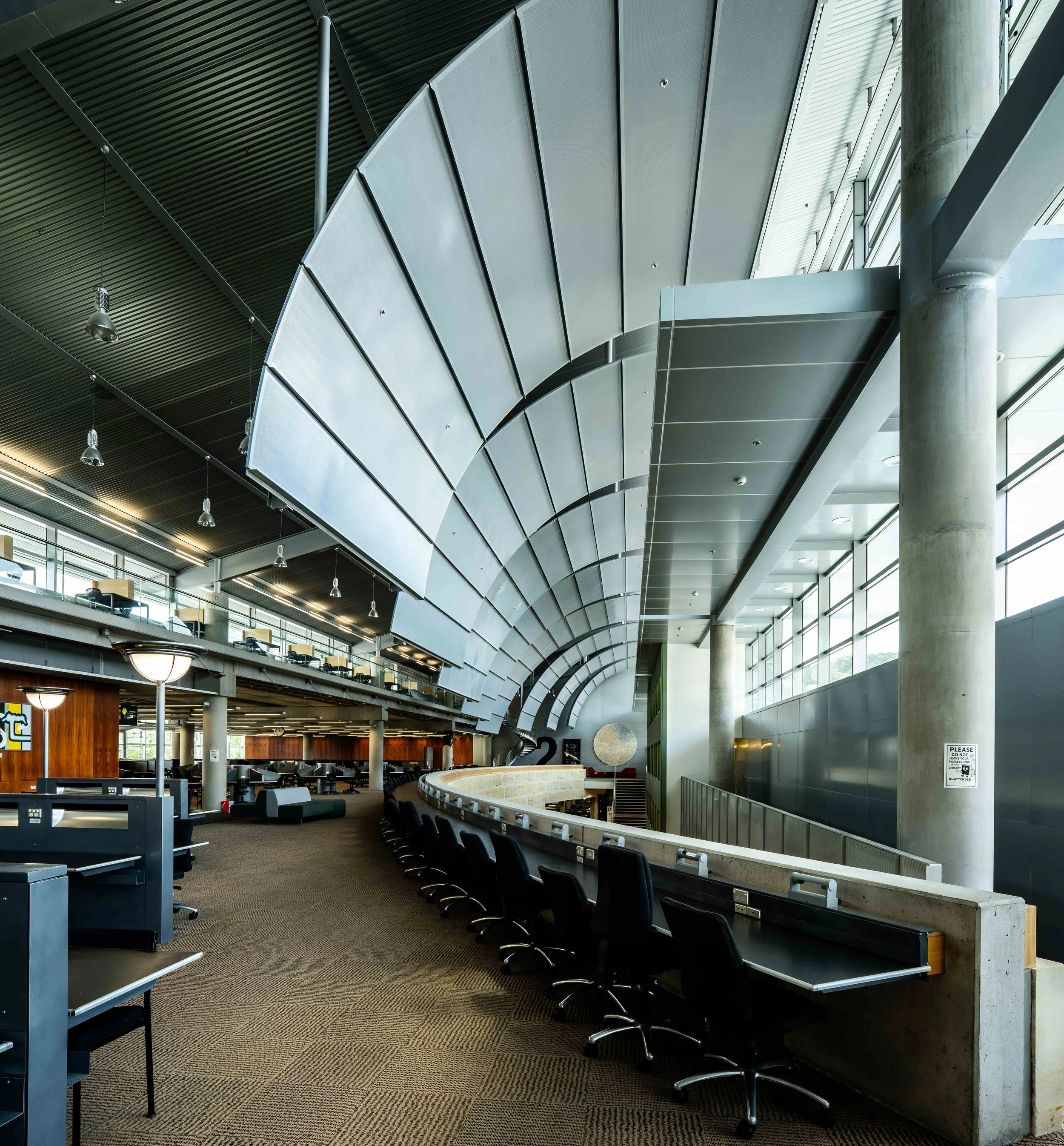
Otago University library, Dunedin. 3 stitch vertical panorama. I don’t think you need to take 3 images as 2 generally stitches together just fine, but just incase…take 3 shots.

Otago School of Dentistry, Dunedin. Here just 2 vertical shift images were required to showcase the grand entrance to the building.

South Dunedin Public Library. Another vertical 2 shot panorama to capture the lighting and panelling design of the foyer hallway.
Dunedin Railway Station, NZ. A 2 shot vertical panorama stitched together in Lightroom. I shot this image from level 1 so dropped the shift vertically down for ground level details and then pushed up to get the ceiling window in shot.
Controlling composition of elements within the frame is a breeze. Having the choice of where to place the subject in the frame is brilliant, no compromises, your choice.
Union Steam Ship Company of New Zealand Ltd Building, Vogel Street, Dunedin. Here not only can I get straight lines of the building, but I can shift the lens up to include less of the foreground road and more of the sky above the building. Try that with a standard lens.
School of Physiotherapy, Otago University, Dunedin. An exaggerated perspective as I am just across the road from the building, but the ability to vertical shift allows me to frame the vehicles nicely in the foreground of the building.
Burns Hall, Dunedin. I shifted the lens vertically here to include the overhanging branches into the frame and reduce the foreground grass in shot.
Burns Hall, Dunedin. In this image I was standing on a steep pathway looking up to Burns Hall, when I leveled the camera, the frame cut off 3/4 of the way up the building, but with vertical shift I was able to easily get it all in the frame.
ACC Building, Dowling St. Dunedin, NZ. A simple vertical shift on this image again took much of the shadow and road out of the image and included more of the blue sky.
I’m really close here to this scene, and I’d say am getting a little distortion on the silos because of it. But again simple vertical shift is giving me so much control with my composition.
Easily shoot Panoramas. Who doesn’t love a good old panorama, whether it’s vertical or horizontal, shift lenses make it so easy.
Tunnel Beach Dunedin, 2 shot horizontal panorama. Here tourists make the most of the sun as others pose on the cliff top for endless photos.
Tunnel Beach Dunedin. A 2 shot horizontal panorama. A view from the top of the cliff looking back down toward the beach below where I took the previous image.
It’s a light and compact lens. Having such a small tool that performs a wide variety of tasks is truly fantastic.
The Negatives: Not many!
f5.6 is a bit soft for use. The solution is stop it down to at least F8 or F11, even F16. I like to run the images through a little bit of software to sharpen them up anyway, and they look great to me.
In the beginning controls are a bit fiddly. The best thing to do is use the lens a lot and then things become second nature. There are a few dials and knobs quite close to each other, but with practise you can operate the lens easy enough. If you are working in darker environments a torch can come in handy to see what settings you have it on, and sometimes when rotating the shift you can lose sight of your aperture settings, so be careful not to bump them!
No lens hood. I would have loved a lens hood on this lens as I often use it in industrial situations where artificial lights are in heavy use, they can create flaring, not the best situation.
Summary
The Laowa 12-24mm f5.6 shift lens is a wonderful addition to my camera bag, and I am very happy to use it for work assignments. I can easily capture architecture scenes as I want. I am a Fujifilm X and Fujifilm GFX shooter. So I love how Laowa is providing shift ability for APSC cameras and are also pleased they have a growing Tilt-Shift Lens line-up for GFX owners. The new Tilt-Shift 35mm f2.8 is an exciting lens I’d love to get my hands on. Well done Laowa you are doing great things in the lens manufacturer space.