The Laowa 12-24mm f5.6 Shift Lens Review.

About a year ago I purchased the Laowa 12-24mm lens. Since then it has become one of my favourite lenses to use. It’s a highly technical lens with incredible versatility. What Laowa has achieved here needs to be applauded. Not only providing a shift lens for APSC sensor cameras, but also a zoom lens, it just blows my mind. Is it the perfect lens? No, but any negatives are outweighed by overwhelming positives, plus this lens is just outright fun to use.

The Positives: WHAT I LOVE

It’s a zoom! The lens was based on a Laowa full frame version of the 12-24mm, but whoever had the lightbulb moment of genius to turn it into a zoom-shift lens should get a pay rise. There is no other zoom shift lens on the market. This lens is unique, a bonafide unicorn! Will it be as sharp as individual primes? Probably not, wide open at f5.6 it’s a bit soft but stop it down to F8, F11 & F16 and you are laughing. The lens is reasonably priced as well, so you really do get plenty of bang for your buck!

It’s fantastic for capturing grand scenes of architecture. The issue I have with a standard wide angle zoom is when you attempt to create nice straight lines in your frame invariably you end up with images you didn’t want to take, like having heavily weighted foregrounds or you cut off elements in the top part of the frame. When shooting a shift zoom lens, the issue is solved. You get to compose a scene as you want it to look. The following 3 examples show off how the Laowa zoom shift lens helped me take the image I wanted to frame.

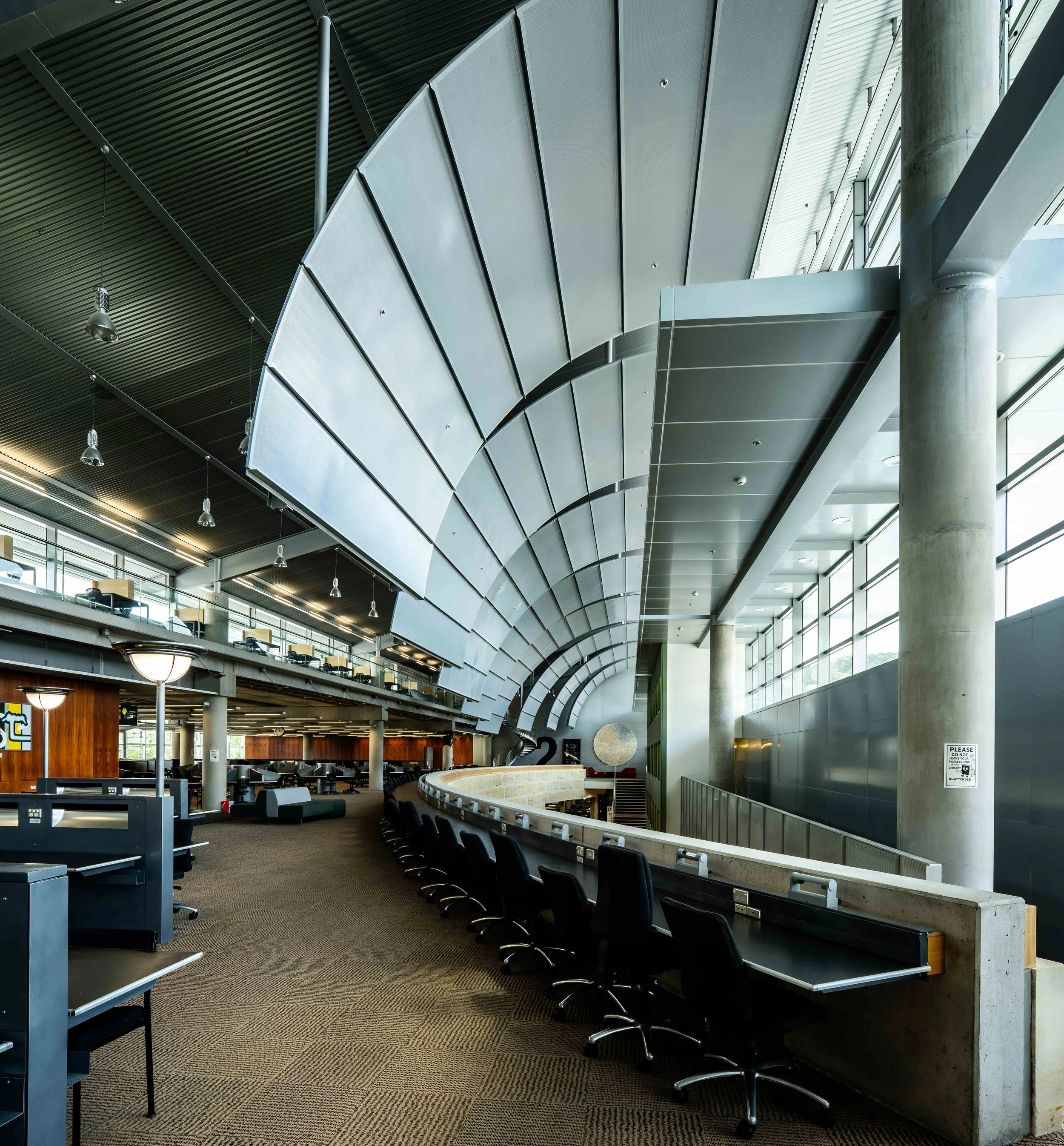
Otago University library, Dunedin. 3 stitch vertical panorama. I don’t think you need to take 3 images as 2 generally stitches together just fine, but just incase…take 3 shots.

Otago School of Dentistry, Dunedin. Here just 2 vertical shift images were required to showcase the grand entrance to the building.

South Dunedin Public Library. Another vertical 2 shot panorama to capture the lighting and panelling design of the foyer hallway.

Dunedin Railway Station, NZ. A 2 shot vertical panorama stitched together in Lightroom. I shot this image from level 1 so dropped the shift vertically down for ground level details and then pushed up to get the ceiling window in shot.

Controlling composition of elements within the frame is a breeze. Having the choice of where to place the subject in the frame is brilliant, no compromises, your choice.

Union Steam Ship Company of New Zealand Ltd Building, Vogel Street, Dunedin. Here not only can I get straight lines of the building, but I can shift the lens up to include less of the foreground road and more of the sky above the building. Try that with a standard lens.

School of Physiotherapy, Otago University, Dunedin. An exaggerated perspective as I am just across the road from the building, but the ability to vertical shift allows me to frame the vehicles nicely in the foreground of the building.

Burns Hall, Dunedin. I shifted the lens vertically here to include the overhanging branches into the frame and reduce the foreground grass in shot.

Burns Hall, Dunedin. In this image I was standing on a steep pathway looking up to Burns Hall, when I leveled the camera, the frame cut off 3/4 of the way up the building, but with vertical shift I was able to easily get it all in the frame.

ACC Building, Dowling St. Dunedin, NZ. A simple vertical shift on this image again took much of the shadow and road out of the image and included more of the blue sky.

I’m really close here to this scene, and I’d say am getting a little distortion on the silos because of it. But again simple vertical shift is giving me so much control with my composition.

Easily shoot Panoramas. Who doesn’t love a good old panorama, whether it’s vertical or horizontal, shift lenses make it so easy.

Tunnel Beach Dunedin, 2 shot horizontal panorama. Here tourists make the most of the sun as others pose on the cliff top for endless photos.

Tunnel Beach Dunedin. A 2 shot horizontal panorama. A view from the top of the cliff looking back down toward the beach below where I took the previous image.

It’s a light and compact lens. Having such a small tool that performs a wide variety of tasks is truly fantastic.

The Negatives: Not many!

f5.6 is a bit soft for use. The solution is stop it down to at least F8 or F11, even F16. I like to run the images through a little bit of software to sharpen them up anyway, and they look great to me.

In the beginning controls are a bit fiddly. The best thing to do is use the lens a lot and then things become second nature. There are a few dials and knobs quite close to each other, but with practise you can operate the lens easy enough. If you are working in darker environments a torch can come in handy to see what settings you have it on, and sometimes when rotating the shift you can lose sight of your aperture settings, so be careful not to bump them!

No lens hood. I would have loved a lens hood on this lens as I often use it in industrial situations where artificial lights are in heavy use, they can create flaring, not the best situation.

Summary

The Laowa 12-24mm f5.6 shift lens is a wonderful addition to my camera bag, and I am very happy to use it for work assignments. I can easily capture architecture scenes as I want. I am a Fujifilm X and Fujifilm GFX shooter. So I love how Laowa is providing shift ability for APSC cameras and are also pleased they have a growing Tilt-Shift Lens line-up for GFX owners. The new Tilt-Shift 35mm f2.8 is an exciting lens I’d love to get my hands on. Well done Laowa you are doing great things in the lens manufacturer space.
A review of the Viltrox 27mm F1.2 - Is China the emerging titan of traditional photography?

Introduction

I have been shooting with Fujifilm gear since November 2012. Since then I have bought various camera bodies, both across the X and GFX series, with a combined total of 10 native Fujifilm lenses.

Never before have I been tempted to try another manufacturers glass.

However, one lens company has in recent times consistently caught my attention. Viltrox were the first to release auto-focus X-series lenses, but, I only really got interested in their products following the release of the 75mm f1.2. That lens has received accolades by many for its overall quality, and while I haven’t purchased or used it as yet, it certainly gave me greater confidence in purchasing their latest lens release, the Viltrox 27mm f1.2

I purchased the Viltrox 27mm f1.2 lens at the same time as the announcement of the Fujifim GF55 f1.7. Both lenses interested me, but ultimately I decided to hold off on the native Fuji GF lens and purchase the Viltrox. The extra light gathering ability and more generous depth of field at wider apertures on an APSC sensor makes for a compelling tool at weddings or events with poor natural lighting.

Buying direct from China

I purchased my copy of the Viltrox 27mm f1.2 via the official Viltrox store. The lens took about a week after purchase to travel from Guangzhou, China to Dunedin, New Zealand. It came via Fedex and in summary was excellent service.

Lens build quality

The lens is solid and has some heft to it. I shoot with GFX as well, so I don’t mind the weight, especially if the glass can give me an edge in low light conditions. The construction uses quality components, I have no complaints on build quality.

First real world use

I received this lens on a Friday, and the next day I took it on a client job to shoot a real estate agent with the vendor and buyer of a church in Central Otago. The church had small windows so there were patches of light I could work with to photograph the 3 people. The 27mm provides a nice normal field of view on APSC sized sensors and the ability to shoot at f1.4 or f1.6 with multiple subjects in the frame all in focus was greatly appreciated. I cannot share any of those images as my agreement negates the ability to publish images from the shoot. What I can say though is the images I took were sharp, even from f1.2. The only minor buzz kill was the prominent vignetting at f1.2 and also the overall less contrasty raw files you get straight out of camera, but, a little work in post, and you can be very happy with the results.

Indoor low light samples

The portrait below is of Sue, an antique shop owner and one of my clients. I just shot the lens wide open using available light, and was able to shoot at 1/125th sec at ISO200. The DOF in this instance gives good context to the subjects environment.

SueTodd, www.suetoddantiques.co.nz

This next two images are of my Dad and Mum, both shot wide open, and they are plenty sharp for my needs. Any vignetting is not really an issue here as it has a nice effect. I am noticing the fall off at f1.2 is quite abrupt, not the same as my GFX50sII files, but this is an unfair comparison.

Street Photography

Below late afternoon sun creates a spotlight in this Lego mural on Willis Street in Wellington. Shot @f2.5. I’d say this lens is a little big for staying discreet on the street.

Willis Street, Wellington.

At f4 this lens is super sharp, and I’m loving what is coming out of the camera. Below is a pic taken at f4 of the Fortune Favours bar and brewery.

More Low light photography

The next image was taken in the early evening at a Wellington restaurant called Olive. I shot it wide open at f1.2 and there is enough DOF for both my friends Mel and Jason to be in focus, that’s a real bonus for a mid-waist type image. You can see I could fit 4 people in this frame, great news for low light group shots.

I support a local charity called K9 Medical Detection (K9MD) by volunteering my photography services. K9MD is training dogs to accurately detect various forms of cancer via smelling urine samples. This year we had a big Zonta fashion show charity fundraiser, I wasn’t working, but, you guessed it, another chance to see how the Viltrox performed. For a wide establishing shot, giving context to the environment the lens worked well. Other than that, this scenario required at least a 70-200mm.

Jonathan Usher, local magician and all round top man entertaining the crowd.

Dress up party with the Adams Family shot at f2

This next image of my yoga instructor shows how quickly the fall off is at f1.2

Krisit from Bend Yoga in Dunedin. Shot @f1.4

Dunedin Wharf @f2.5

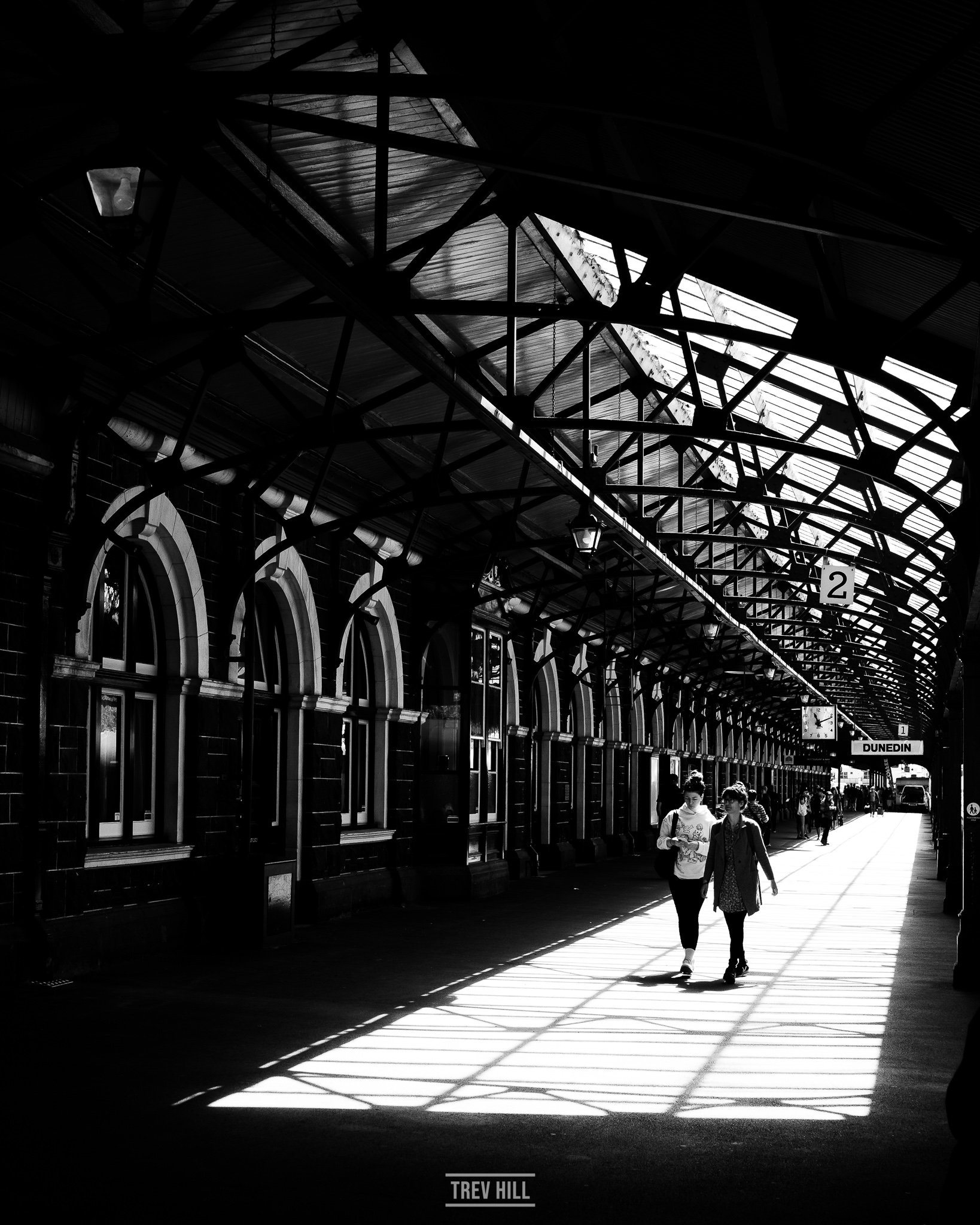
Dunedin Railway Station @f 4.5

I shot the following 3 car cruise images @ f1.2. and used Classic Chrome for creating a more nostalgic vibe to the images. One point I will make is the warmer cast the lens creates on images and something to be aware of when using both native Fuji glass and the Viltrox together.

A different car show, but still an easy pic with the Viltrox 27mm F1.2

In the image below I photographed an event at a historic venue in Dunedin. The light was really challenging in the space, but opening up the aperture to f1.2 meant I could take an image at about 1/50th of a second at ISO 200.

Olveston House - 80th birthday celebration.

Another yoga image, plenty of subject separation for my taste at F1.2.

Yoga pose.

Cafe across the road from Otago University. XT5 jpg with chroma colour on strong setting.

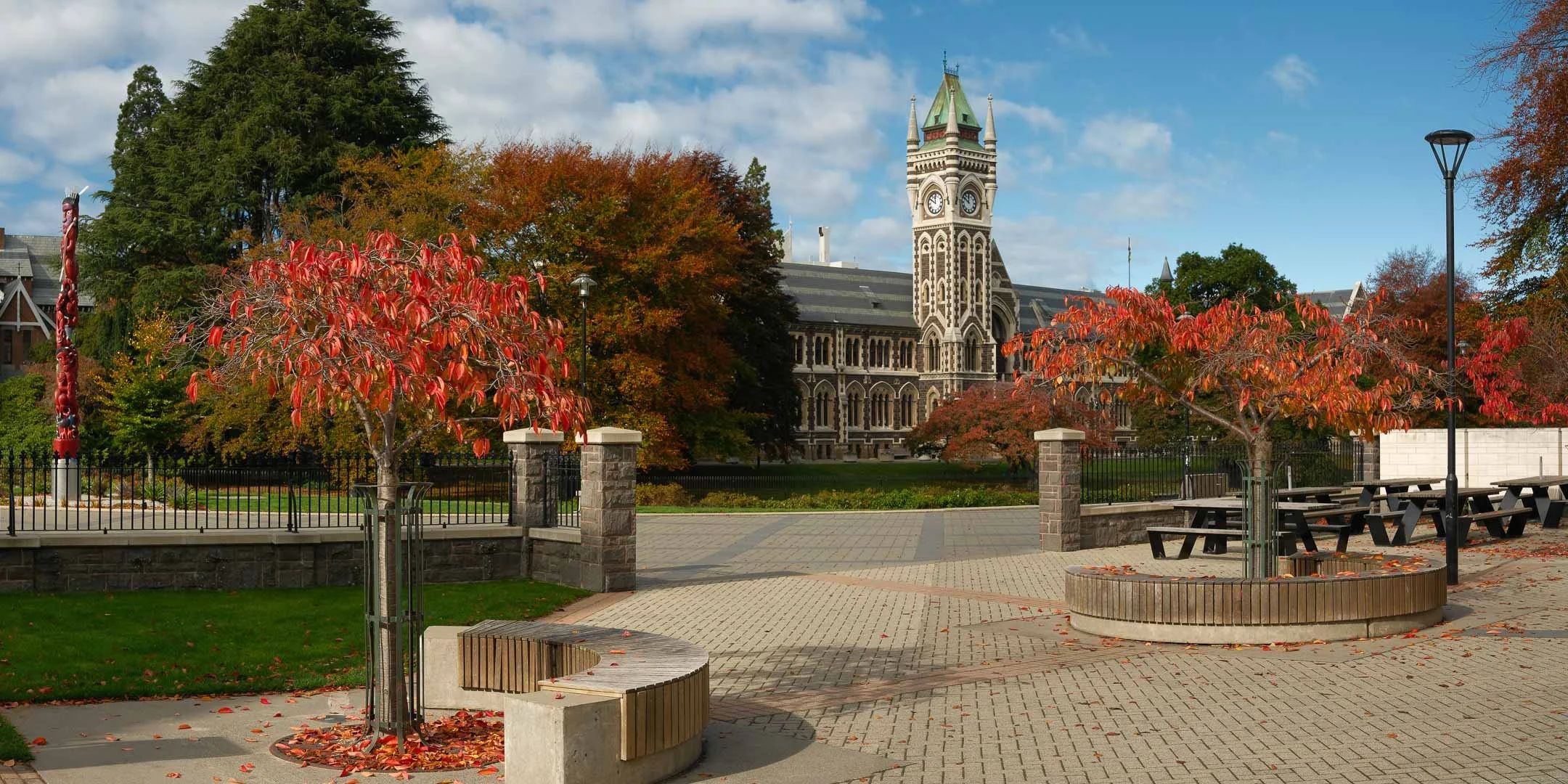
Otago University Clock tower, 2 shot panorama @f5, using the XT5.

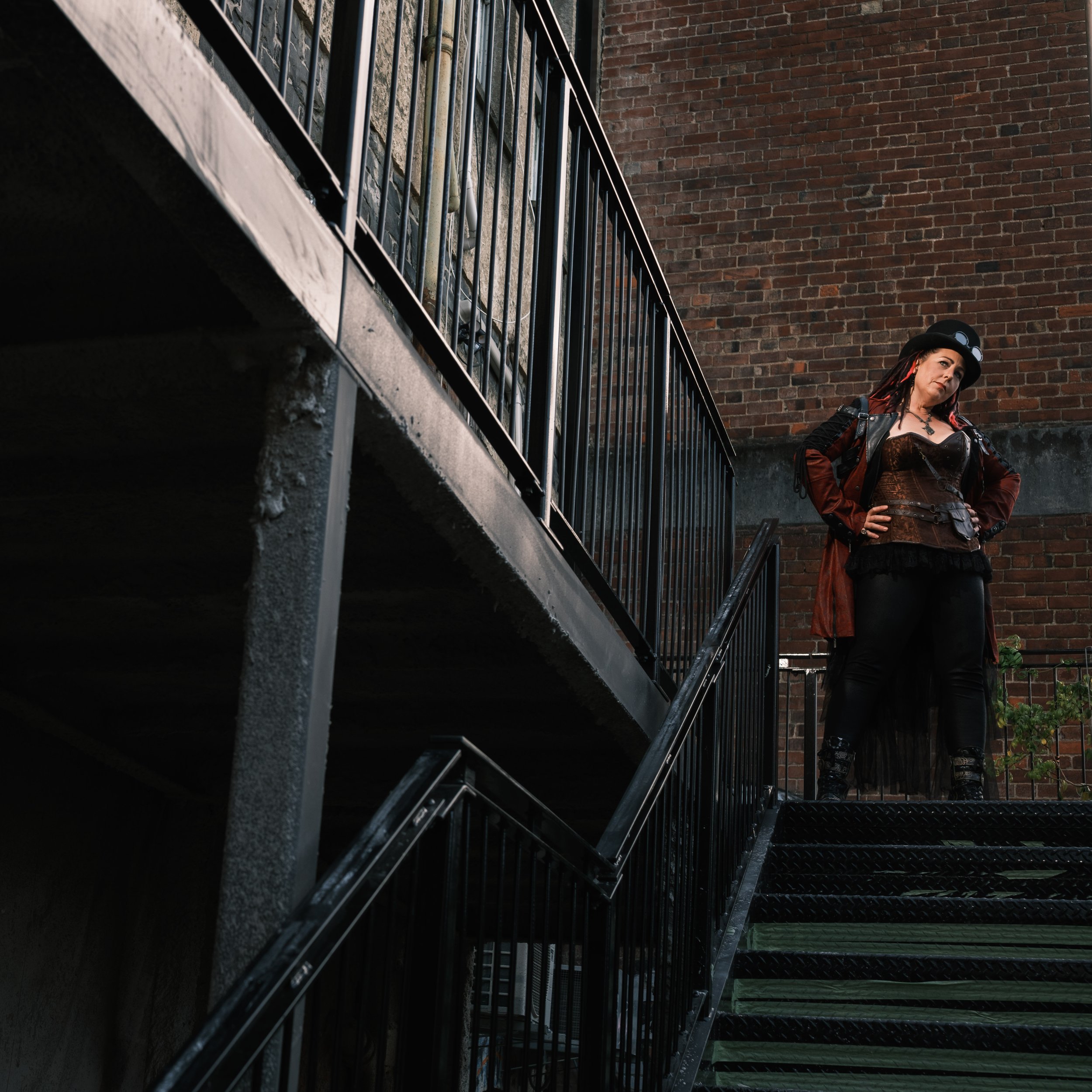
Steampunk shoot.

Steampunk shoot, I have posted other images from this session on a later blog entry, see below in the menu for the blog entry.

Viltrox 27mm 1.2 @f4 Reala Ace film simulation (lightroom versio)

Can the Viltrox 27mm 1.2 resolve the 40mp sensor of Fuji’s latest line of cameras?

The short answer here is yes, hell yes!

Could the Viltrox 27mm f1.2 lens shoot infrared?

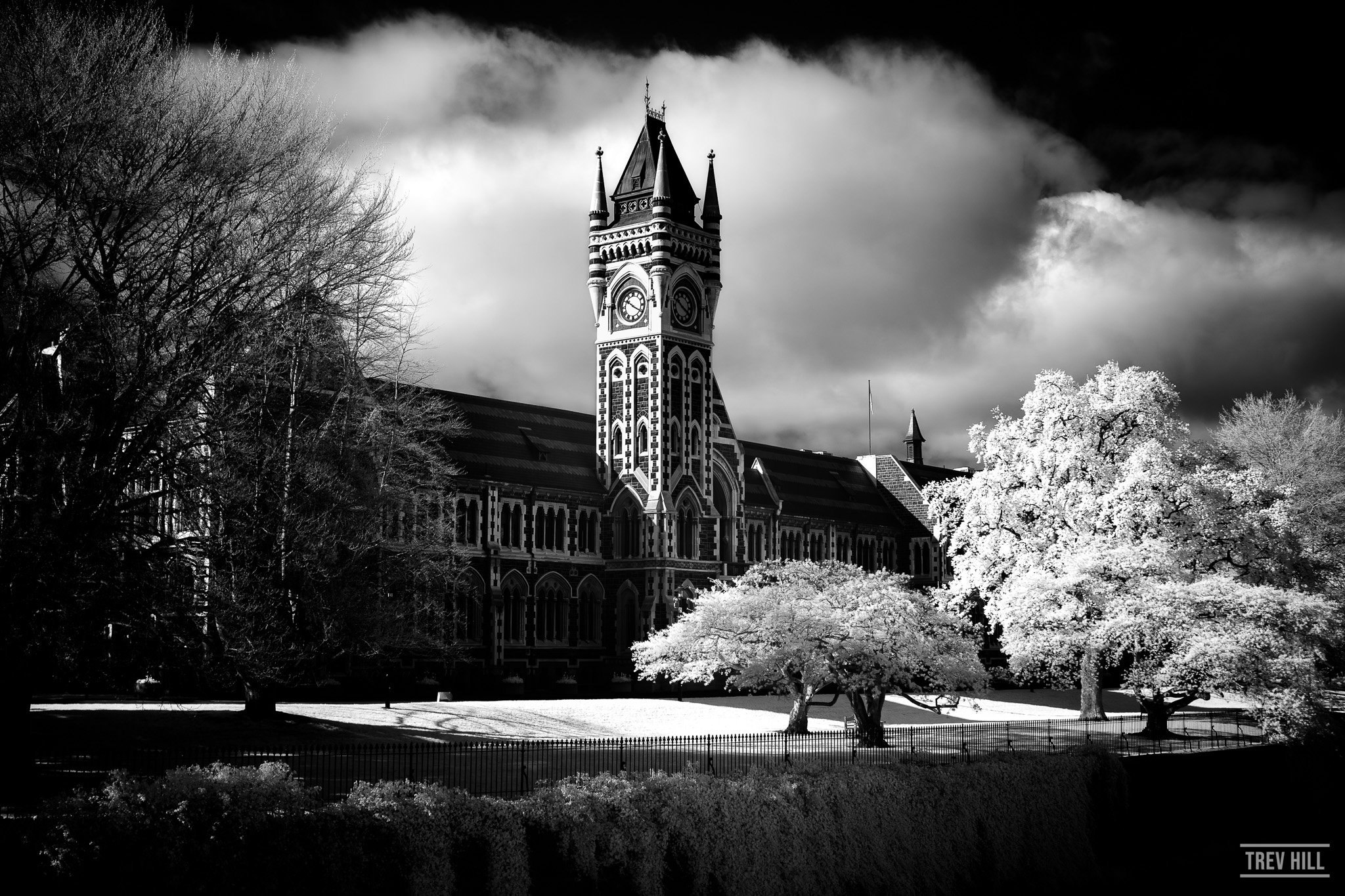
I have jumped down the rabbit hole on infrared photography, so a new prime lens begs to be tested. I converted my Fuji XE1 to infrared and have thrown the lens on for testing. The short answer to the question of ‘can you use the lens for infrared photography?’ is yes, but with caveats. I haven’t done thorough testing but I think the Viltrox lens develops a central hotspot maybe around f3.2. While you think this may make it unusable for landscape type images, I found shooting at f2 worked out nicely if you give yourself enough distance from the main subject and let physics do their job with depth of field as demonstrated below.

Otago University Clock Tower.

In this infrared image below of the Otago University school of business, I again shot at f2, and I’m happy to report I am getting no discernable hotspot from the lens on my IR converted Fuji XE1.

Otago University School of Business.

The image below of the stunning Otago Boys High School was a two shot panorama shot @ f2.5

Otago Boys High School shot at f2.5

A wider view of The Otago University clock tower with the brand new maori carving on display in the foreground. Shot @f2

The Dunedin Railway Station. shot at f2.5

Thoughts after 7 months of use

I am really happy with the Viltrox 27mm F1.2, it is sharp wide open, and can be stopped down to F4 to get stellar results. With such a bright aperture this lens is a great addition for event photography like weddings where light can be at a premium. I have shot 2 weddings with it and the low light gathering of f1.2 was greatly appreciated. The lens is excellent for thigh up shots. The only observation I would note is the warm rendition of the lens. In my opinion Fuji lenses display better colour straight out of the camera, but that comes at a premium. The other point worth noting is this lens is a fair chunk of glass and carries a bit of weight. All in all though it’s worthy of adding to your kit. I love my copy and are interested in seeing what comes next from Viltrox.

What lens should Viltrox put on their roadmap in the future?

I love where Viltrox is going, they have a pro series of lenses delivering great results. For me I’d like to see an f1.2 added for the 18mm focal length, maybe f1.4 if the size was too large. A lens like that would be invaluable in tighter spaces often found at events like weddings, with brides getting ready. I believe a lens around the 50mm mark is coming, and that will be fantastic, so all in all it’s hard to complain about the situation, but 18mm (28mm Full Frame equivalent) would be a winner.

Is China the emerging titan of traditional photography?

I am extremely excited to see the emergence of Chinese companies like Viltrox and Godox (I own a few Godox flash units) make waves in the realm of enthusiast and professional photography equipment. The industry can only benefit from a combination of innovation, excellence and keenly priced gear. Viltrox is bringing great value and choice to the Fujifilm brand. But, what next? Yes, continuing to supply X-series users with lens options should be part of Viltrox’s master plan, but I also think they have an opportunity to capture the imagination of Fujifilm GFX users. Case in point, the Mitakon 65mm f1.4 is another Chinese manufactured lens, yes it’s manual focus, but despite that, this lens has developed a cult following among the GFX user community as having a ‘medium format look.’ If Viltrox could make a similiar normal view AF lens with a fast aperture of around f1.4, replicating the mythical ‘medium format look’, in my humble opinion they would make a killing. The user base of GFX is continually growing, so if Viltrox dares to dip it’s toes into the format with AF lenses, having no competition other than Fujifilm, they might well have plenty of customers lining up to buy their product.

So yes, let China become a titan, and let Viltrox continue to satisfy Fujifilm users with interesting and innovative lens options. With China increasingly becoming a strong consumer base for camera sales it makes sense they have companies creating photography products we all want to use.

Update July 2025

This is a lens I have mixed feelings about. On the negative side, it is big, heavy and limited in its use cases for work. The warmer hues the lens imparts don’t work well straight out of the camera with native Fujifilm lenses, when delivering to clients as a set, so it’s not ideal. However, the glass is sharp wide open, and if there is enough working room at a location, it can be a great tool, delivering crispy raw files.

A two-shot panoramic image using the Viltrox 27mm f1.2 @ f5.6